Custom Closet Systems For Couples: Shared Storage That Reduces Clutter
May 19, 2026
Maximizing Vertical Space: Stylish Ideas for Bathroom Wall Cabinets
July 1, 2026
Choosing the perfect look for your kitchen or bathroom involves understanding how different treatments interact with natural wood. The right wood cabinet finishes enhance the natural grain, complement your interior design, and protect your investment from the daily demands of a busy household. Navigating the choices between various treatments can feel overwhelming without a clear breakdown of how each option performs over time.
For over 40 years, Cabinet Genies has helped homeowners across Southwest Florida transform their living spaces with tailored cabinetry solutions. Our family-owned team focuses on delivering a seamless balance of aesthetic beauty and functional longevity to homes in Cape Coral, Fort Myers, and Naples. Exploring the characteristics of stains, paints, and sheens can help you make an informed decision for your next home renovation.
Table of Contents
Understanding the Variety of Wood Cabinet Finishes
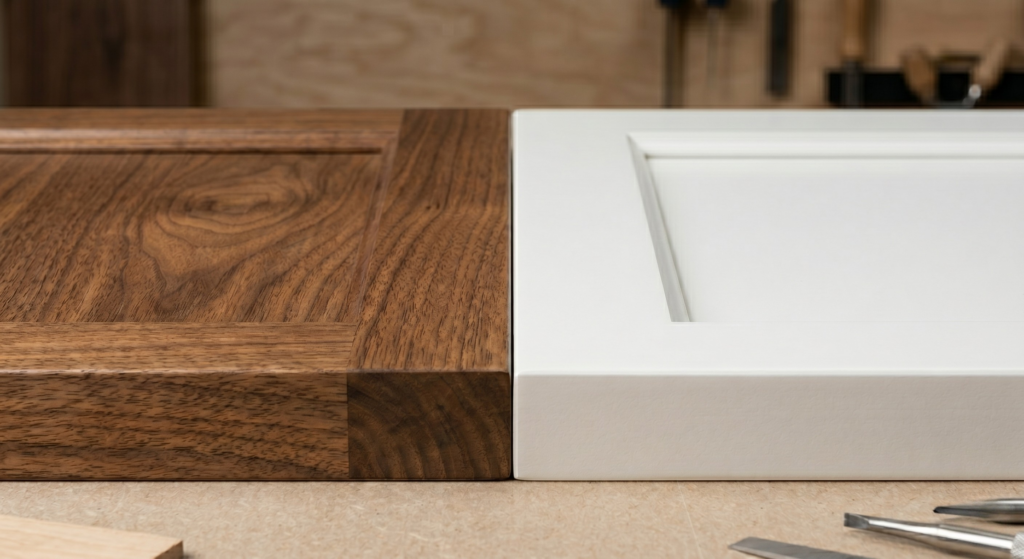
Wood cabinet finishes refer to the protective and aesthetic coatings applied to wooden cabinetry to enhance its appearance and shield it from moisture, stains, and daily wear. These treatments include stains that highlight natural grain, paints that offer solid color, and topcoats that determine the overall shine. Selecting the appropriate option helps ensure your cabinetry withstands the unique coastal climate of Southwest Florida while maintaining its visual appeal.
The choice you make impacts both the daily maintenance routine and the long term durability of your cabinetry. Different wood species interact uniquely with various coatings, meaning a treatment that looks excellent on cherry might look completely different on oak or maple. Understanding these relationships allows you to select a combination that elevates your entire space.
Main Types of Finishes:
- Stains. These enhance the natural characteristics of the wood by seeping into the pores and highlighting the grain patterns.
- Paints. These provide a solid, opaque layer of color that completely covers the underlying wood grain for a crisp, uniform look.
- Glazes. These are accent techniques applied over a base coat to highlight architectural details, profiles, and door moldings.
- Clear Coats. These serve as the protective top layer, sealing the wood or color coat against moisture and physical damage.
The Characteristics of Wood Stains
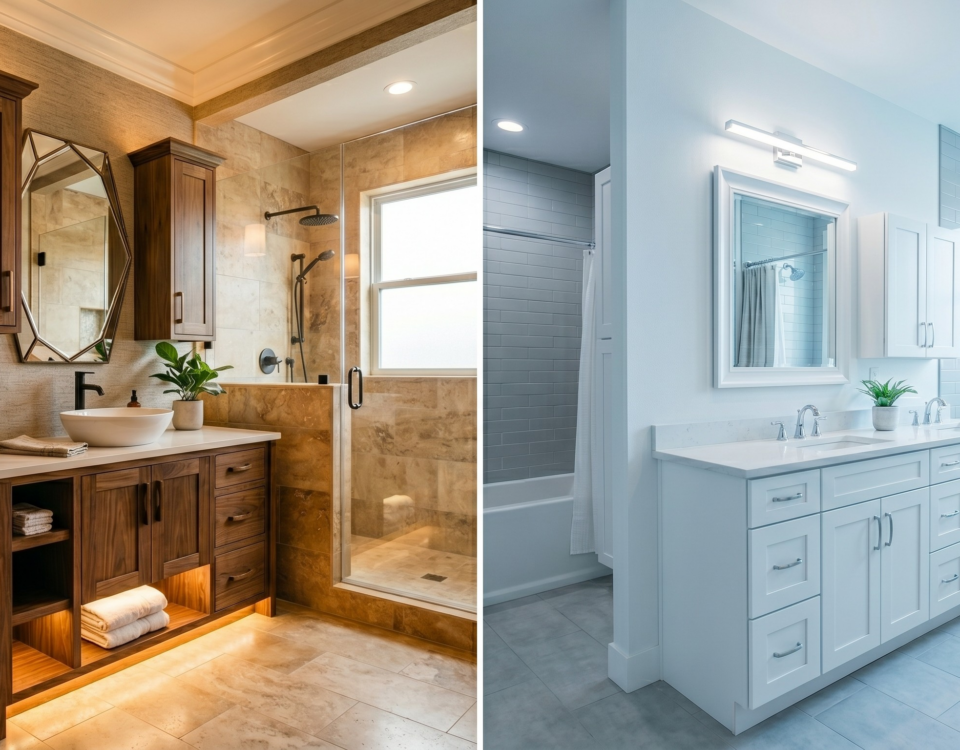
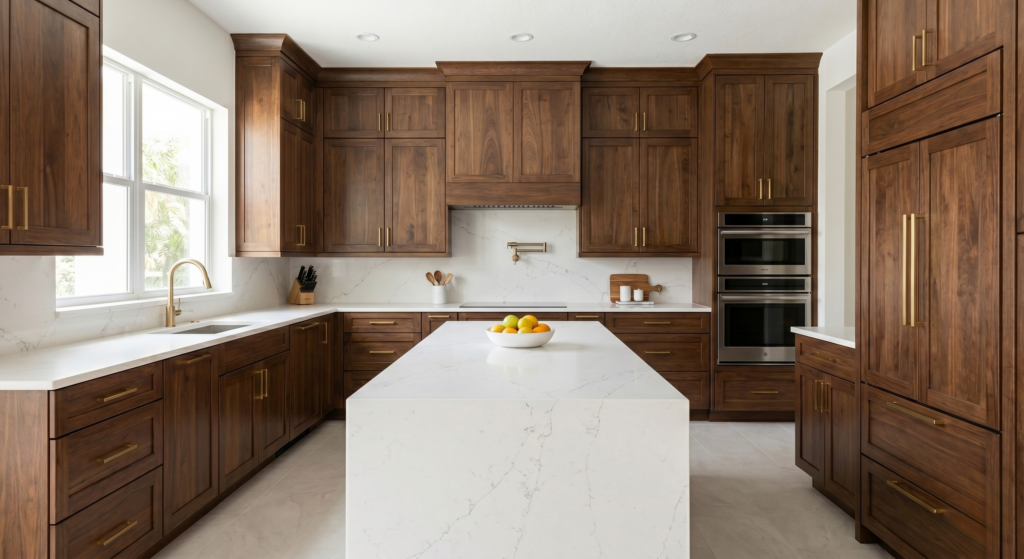
Wood stains are semi transparent or semi opaque coatings designed to tint the wood while allowing the natural grain, knots, and variations to remain visible. They range from light, subtle tints that mimic natural tones to deep, dark hues that create a sense of traditional warmth and luxury. This option is ideal for homeowners who appreciate the organic, unique beauty of natural timber.
Using stain for your wood cabinet finishes brings a classic, timeless warmth to a room that coordinates well with traditional, transitional, and rustic design styles. Because stain penetrates the wood fibers rather than sitting entirely on top, it minimizes the visibility of minor scratches or nicks that occur over time. This makes it an excellent choice for high traffic kitchens or active households.
Material selection plays a significant role in the final appearance of stained cabinetry. Lighter woods like maple accept stains differently than open grained woods like oak, which can absorb more pigment in its prominent grain lines. If you live in one of our service areas, you can consult with a design professional to understand how different wood species respond to specific stain formulations.
The Versatility of Painted Cabinetry

Painted cabinetry involves applying a solid, opaque colored coating over the wood or medium density fiberboard substrate to achieve a smooth, uniform appearance. This approach completely conceals the underlying wood grain, offering a clean canvas that suits modern, transitional, and classic coastal aesthetics. It allows for an endless spectrum of color choices, from crisp whites to dramatic dark hues.
Homeowners frequently select painted finishes because they offer incredible flexibility in interior design and can make a room feel brighter and more expansive. A smooth paint application provides a sleek surface that feels clean and sophisticated, which is highly sought after in upscale renovations throughout Fort Myers and Sanibel.
| Characteristic | Stained Cabinet Finishes | Painted Cabinet Finishes |
| Grain Visibility | High; highlights natural patterns | None; completely opaque coverage |
| Touch-up Ease | High; minor scratches blend easily | Moderate; requires matching paint |
| Color Variety | Limited to wood and earth tones | Virtually limitless custom colors |
| Humidity Response | Moves naturally with wood joints | Can show hairline seams at joints |
Painted cabinetry remains one of the most popular choices for modern residential kitchen design due to its clean lines and styling flexibility. However, because wood naturally expands and contracts with changes in temperature and humidity, painted wood doors may eventually display tiny hairline fractures at the joints. Home improvement resources like Family Handyman’s Guide to Understanding Wood Movement frequently note that this minor shifting is a normal, expected characteristic of solid wood cabinetry at the joints rather than a structural defect.
Selecting the Right Finish Sheen for Your Home
Cabinet sheen refers to the level of light reflection that a cured protective topcoat emits, ranging from completely matte to a high gloss mirror effect. The sheen level you choose influences how bright the room appears, how easily the surfaces can be wiped clean, and how noticeably fingerprints or dust will show. Striking the right balance involves considering both your aesthetic goals and your lifestyle needs.
The degree of luster on your cabinetry can alter the perception of color and texture in your kitchen or bathroom. Higher gloss levels reflect more light, which can brighten smaller spaces but may also highlight minor surface imperfections or smudges. Homeowners exploring regional design inspiration on resources like Sherwin-Williams’ Paint Gloss & Sheen Guide frequently look at how lower gloss levels absorb light, creating a softer look that hides dust and prints but requires careful cleaning to avoid creating shiny spots over time.
Common types of sheens to choose from include:
- Matte. This flat option reflects almost no light, providing a contemporary look that hides imperfections but requires gentle care during cleaning.
- Satin. This low sheen choice offers a soft luster reminiscent of an eggshell, balancing easy maintenance with a subtle, understated elegance.
- Semi Gloss. This popular option provides a noticeable shine that reflects light beautifully and stands up exceptionally well to frequent scrubbing.
- High Gloss. This ultra reflective surface delivers a sleek, modern, almost glass like look that is highly durable but requires regular wiping to remove prints.
Ensuring Longevity Through Cleaning & Maintenance
Protecting your wood cabinet finishes from the unique climate factors of Southwest Florida begins with proper, everyday maintenance. The combination of high humidity, salt air, and intense sunlight places extra stress on residential interior surfaces, making a gentle cleaning routine essential. To prevent moisture from degrading the wood’s protective topcoat, always wipe down surfaces using a soft microfiber cloth slightly dampened with warm water and a drop of mild, pH-neutral dish soap, followed immediately by a dry cloth to prevent standing moisture.
When planning long-term care for your home renovation, reviewing how to clean and care for wood finishes can offer valuable insight into keeping your wood looking pristine. Sticking to a gentle, consistent cleaning routine ensures your wood cabinet finishes continue to protect your investment from the daily moisture generated by cooking, bathing, and tropical weather conditions.
Crafting Your Dream Space with Guided Expertise
Partnering with an experienced design team allows you to navigate the selection of wood cabinet finishes with confidence and clarity. Professional designers help you coordinate your cabinet colors, wood species, and sheen levels with your countertops, flooring, and lighting. This comprehensive approach ensures that every element of your design works together to create a harmonious, high end look.
At Cabinet Genies, we believe that a truly luxurious space is one that functions beautifully while reflecting your personal style. Our structured, step by step methodology guides you through every decision, from initial concepts to the final installation of your custom cabinets. This detail oriented process helps eliminate the guesswork and ensures a beautiful, long lasting result.
If you are ready to explore the possibilities for your home, our team is here to assist you with your upcoming kitchen remodeling or luxury bathroom remodeling project. We invite you to learn more about us and discover how our family values and award winning design expertise can bring your vision to life. Please visit our contact page to schedule your personalized design consultation today.
Frequently Asked Questions
Which cabinet sheen is the easiest to clean and maintain?
Satin and semi gloss sheens are generally the easiest to maintain because their smooth, slightly reflective surfaces allow grease and smudges to wipe away easily. They offer an ideal balance by hiding minor imperfections better than high gloss while resisting scrubbing better than matte options.
Can you apply a glaze over both stained and painted cabinets?
Yes, a glaze can be applied over both stained and painted surfaces to add depth and highlight the architectural details of the door style. The glaze sits within the profiles, corners, and grooves of the cabinetry, creating a sophisticated, multi dimensional look.
How does the Florida humidity affect the choice between stained and painted cabinets?
High humidity causes natural wood to expand and contract. Because painted cabinets have an opaque, rigid coating, this natural wood movement can eventually cause tiny, visible hairline cracks at the joints (where the door frame meets the center panel). Stained cabinets, on the other hand, absorb the pigment directly into the wood pores rather than sitting on top, making any natural shifting or joint movement practically invisible.